How a Lyndhurst Loss Gets Handled From East Rutherford
Active losses in Lyndhurst get the same dispatch protocol as any other call into our East Rutherford base. Real human on the line, address + cause + access captured in the first 90 seconds, truck rolling within 10 minutes. The information layer is thin on purpose — the people who answer the phone are the people who decide what gets loaded onto the truck.
When the loss is active rather than discovered-after-the-fact, the response is sub-hour arrival anywhere we cover. Pre-positioned equipment and the right crew size for storm season are how we hold that target during surge events. Lyndhurst is roughly 2 miles from where our East Rutherford crew bases out of, so under normal traffic that is a 10-20 minute response. We pre-stage trucks and equipment for the seasonal surge windows specifically so individual arrival times do not slip during storm events.
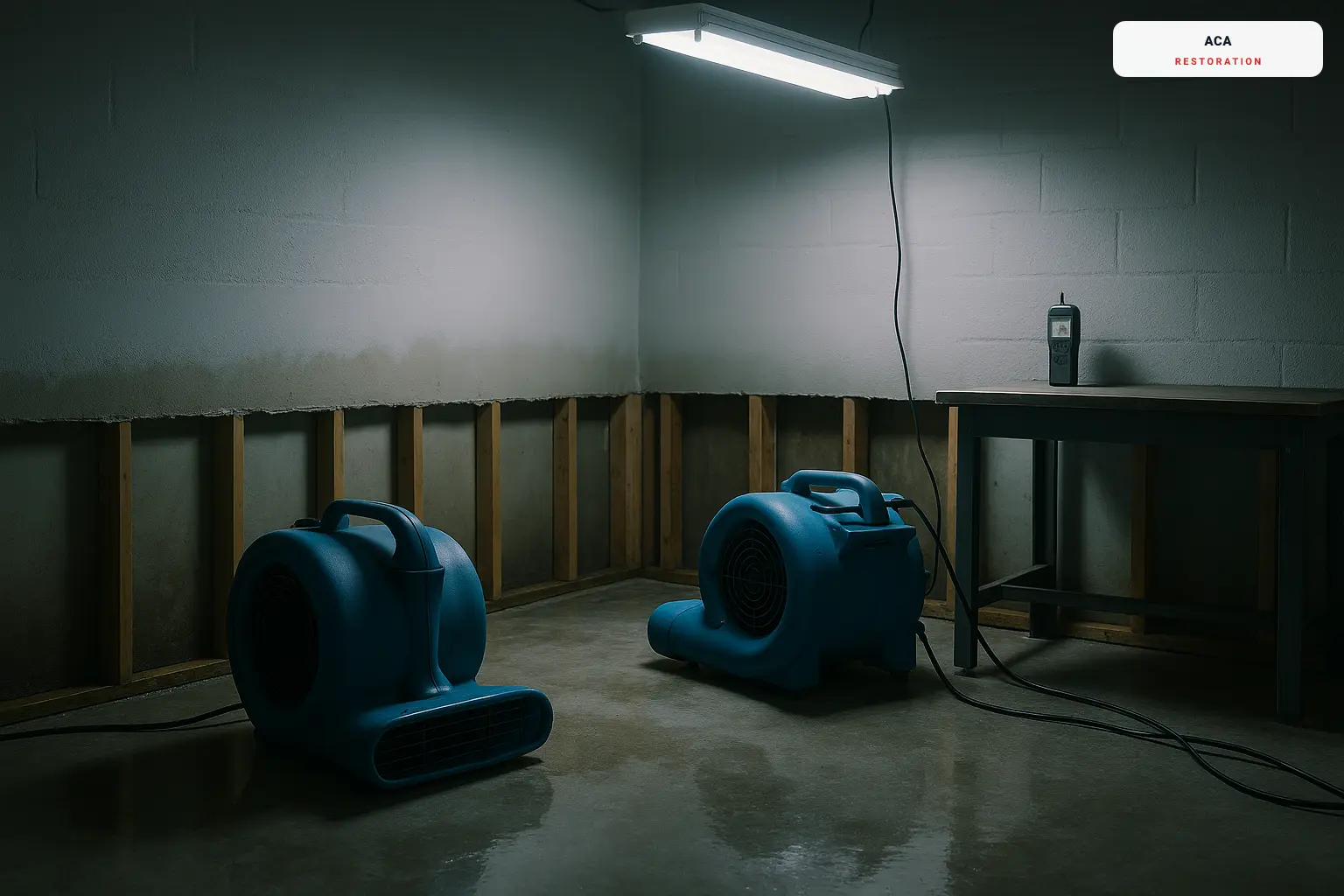
Once the truck is parked, the work follows the same pattern every time: source-control (water off, power isolated, containment up), then comprehensive documentation (photos, moisture readings, written cause-of-loss narrative), then sized equipment deployment. Daily monitoring visits with logged readings until every wet substrate returns to baseline. The reconstruction crew is the same team that did the mitigation — same phone number, same contract, same accountability through final walkthrough.
How carrier paperwork gets handled in Lyndhurst
The carrier paperwork on a Lyndhurst loss starts at hour one and continues through final invoice. Daily moisture logs mapped to a building diagram, before/during/after photos of every affected surface, an Xactimate-format scope for both mitigation and reconstruction. Carrier-approved adjusters get a complete file rather than a series of follow-up requests. The cause-of-loss framing is the single most important document because it dictates which policy bucket pays and at what limits.