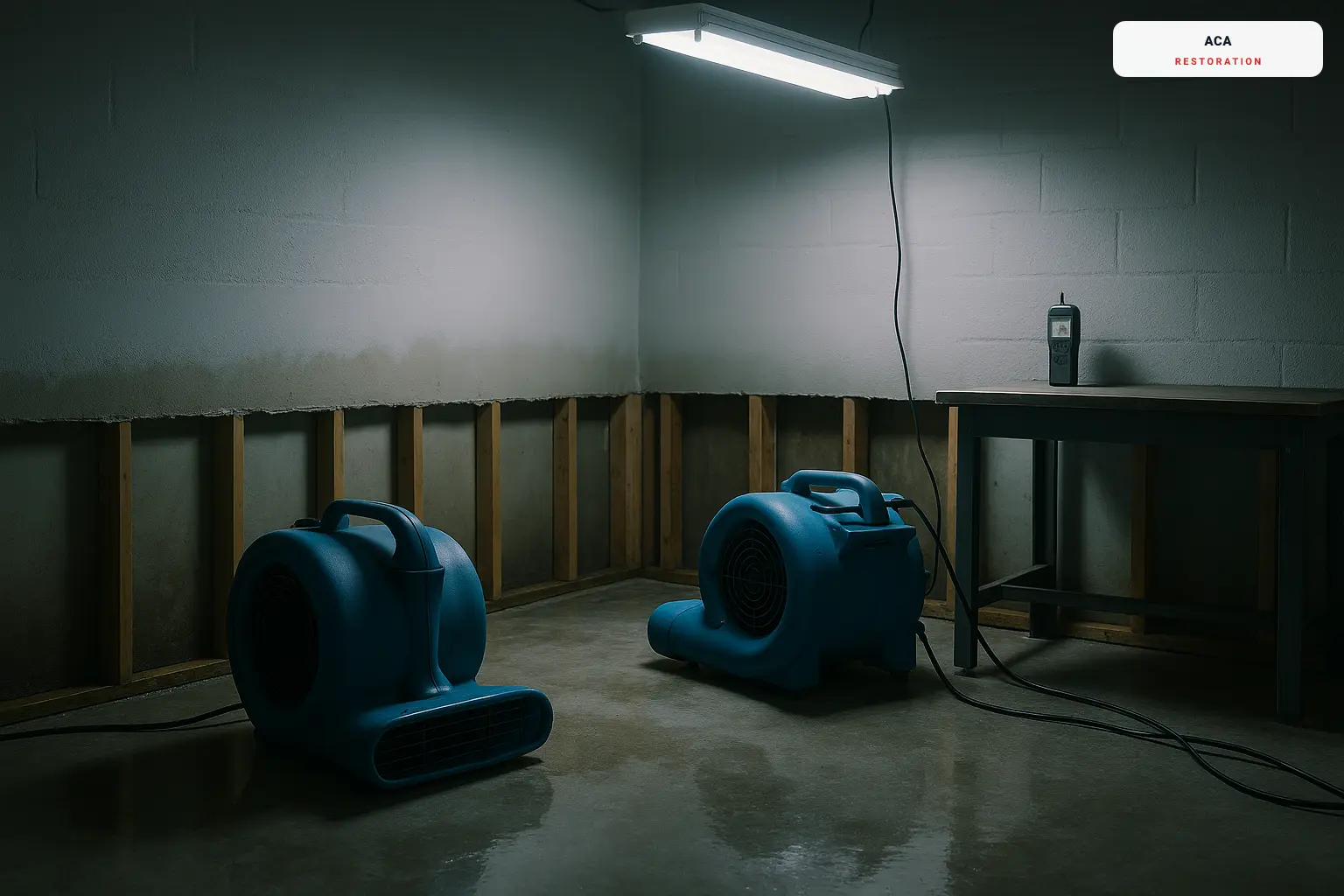
Why Cutting Drying Short Is the Most Expensive Mistake
The single most common pattern that turns a $5,000 mitigation into a $40,000 mold remediation: a contractor who says "looks dry, we are done" at day three when the meter still reads above standard. Six weeks later, mold growth appears behind the wall, the carrier opens a separate claim or denies it as "improper drying," and the homeowner pays out of pocket.
Our protocol: equipment runs until every monitored substrate hits the dry standard documented for that specific material. If readings stall — which happens for hardwood + dense materials — we reposition equipment, add desiccant dehumidification if needed, and extend the run. Average residential job: 3-5 days. Hardwood-heavy jobs in older East Rutherford homes: sometimes 7-10 days. We give an honest timeline at the start and update if conditions change.
What this means for your insurance claim: every day of drying gets logged with equipment count + moisture readings. Adjusters see a complete record. No questions later about whether the job was completed properly. Mold prevention happens during drying — not after — and the documentation backs that up.